
SEO & AI Search
B2B SEO Strategy: A Complete Guide for 2027
A practical B2B SEO strategy from a B2B SEO consultant: how B2B SEO differs from B2C, keyword research for buyers, BOFU pages, technical SEO, AI search, and measuring pipeline.

GEO vs SEO, explained by a B2B SEO consultant. What generative engine optimization changes, what stays the same, and how to do both without burning out.

Quick answer
SEO helps your pages rank in Google's search results. GEO (generative engine optimization) helps your brand get cited inside AI answers from ChatGPT, Perplexity, Gemini, and Google's AI Overviews. They're not rivals: most pages cited in AI Overviews already rank in Google's top 10, so GEO is built on SEO, not instead of it.
Key takeaways
Everyone’s asking if GEO killed SEO.
It didn’t. It moved in.
I’ll be honest: when the acronyms started piling up (GEO, AEO, LLMO, AIO), my first reaction wasn’t curiosity. It was fatigue.
I’ve been in SEO for 15 years. I’ve ridden out Panda, Penguin, Helpful Content, and every core update in between. And I still caught myself wondering if everything I knew had an expiry date.
It doesn’t. But some of it needs an update.
This is the version I wish someone had given me: what GEO vs SEO actually means, what changes, and what doesn’t.
SEO (search engine optimization) is how you help traditional search engines like Google find, understand, and rank your pages. The goal is a high position on the search results page, and the click that comes with it.
GEO (generative engine optimization) is how you help AI platforms like ChatGPT, Perplexity, Gemini, and Google AI Overviews understand, trust, and cite your content inside their AI responses.
One gets you ranked. The other gets you quoted.
| What differs | SEO | GEO |
|---|---|---|
| Goal | Rank in Google’s search results | Be cited in AI answers |
| Where it shows | Search engine results pages | ChatGPT, Perplexity, Gemini, AI Overviews, AI Mode |
| What gets chosen | A page | A passage, a fact, or a brand |
| What wins | Relevance, technical health, backlinks | Clear answers, original proof, consistent brand mentions |
| Success looks like | Rankings, clicks, organic traffic | Citations, mentions, share of voice in AI answers |
The biggest shift for me? AI answers pick passages, not pages.
A search engine ranks your whole page. An AI tool pulls the one paragraph that answers the question, and sometimes just your brand name. If your best answer is buried under a 300-word intro, it won’t get picked.
That’s also why clicks are harder to win now. A BrightEdge study from May 2025 found impressions up more than 49% a year after AI Overviews launched, while click-throughs fell by nearly 30% on affected results.
People still see you. They just don’t always visit.
Here’s the stat I keep coming back to.
An Ahrefs study of 1.9 million citations from 1 million AI Overviews found that 76.1% of the pages cited ranked in Google’s top 10. Another 9.5% ranked between positions 11 and 100. (Published July 2025.)
Read that again.
Three out of four AI Overview citations go to pages that already rank. So SEO fundamentals still decide who gets in the room. SEO is not dead. It’s the foundation AI models stand on.
That’s not a theory for me. On every client project, I fix the technical foundations first: crawlability, speed, site structure, and on-page SEO. Then content. Then AI search.
I track AI visibility for B2B clients every month. Two patterns stand out.
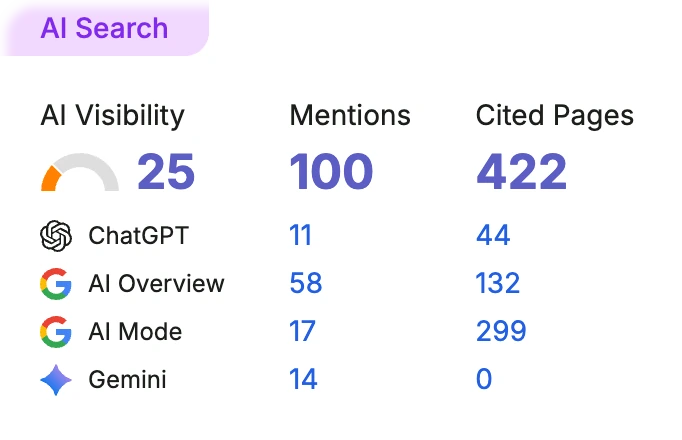
Pattern one: strong SEO shows up in AI answers. For a B2B tech client, organic traffic grew 81%. Their AI search panel now shows 100 AI mentions and 422 cited pages across ChatGPT, AI Overviews, AI Mode, and Gemini.
Pattern two: each AI tool behaves differently. A B2B manufacturing brand shows up in Google’s AI Overviews, AI Mode, and Gemini. But ChatGPT? Not yet.
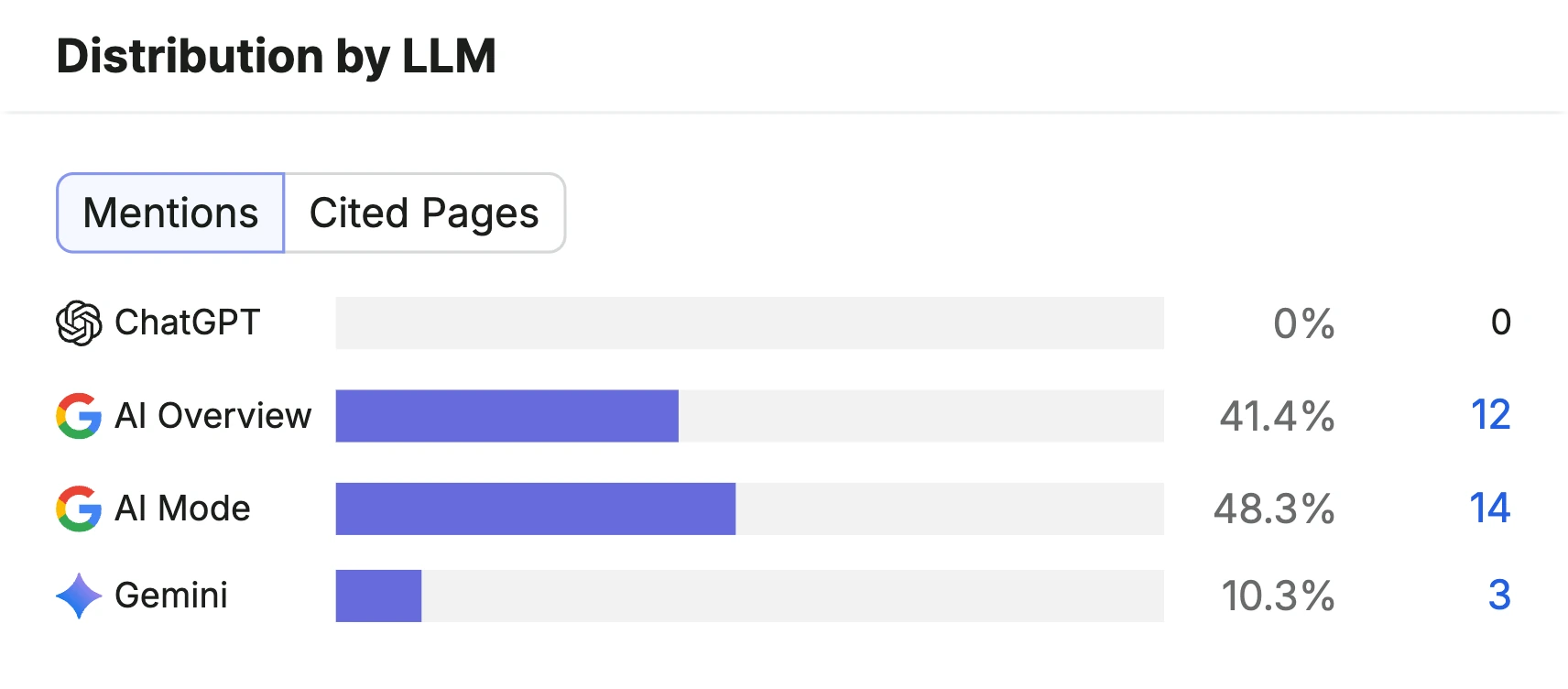
Same brand. Same content. Different engines, different answers.
That gap is exactly where GEO work lives.
I’m not going to give you a 15-step framework. Three moves, repeated.
Technical SEO, site structure, and pages that load fast. AI can’t cite what it can’t crawl.
This is still the unglamorous 80% of the work. Do it anyway.
Put the direct answer in the first two sentences. Then explain.
Use clear headings, short paragraphs, FAQs, and tables. Add what only you can add: original data, real examples, and expert quotes.
Generative AI tools learn what your brand is from the whole web, not just your site. Reviews, industry publications, podcasts, Reddit and community threads, and digital PR all shape how you’re described.
Consistency matters here. If your website says one thing and your LinkedIn says another, AI tools get confused, and so do buyers.
You can’t improve what you don’t track. Here’s what I report on:
Tools like Semrush’s AI visibility reports and Ahrefs’ Brand Radar help, plus a manual check: ask the AI tools your buyers’ questions yourself, once a month.
When I wrote about the SEO reckoning last year, I said ethical SEO is timeless. I still believe that.
GEO didn’t change what good content is. It raised the price of bad content.
Clear answers. Real proof. A brand people talk about. That was good SEO before AI showed up. It’s good GEO now.
So no, you don’t need to start over. You need to fix the foundations, write like you’re being quoted, and show up beyond your own website.
If you’d like help doing that for a B2B brand, here’s how I approach AI SEO and GEO for B2B companies.
Now I’m curious: has your brand shown up in a ChatGPT or AI Overview answer yet? Tell me on LinkedIn. I read every message.
No. AI-driven search still leans on pages that rank in traditional search results. SEO and AI search now work together: SEO gets you found, GEO gets you quoted.
No. AI answers lean heavily on pages that already rank well in search, so GEO without SEO has nothing to stand on. Think of GEO as the newer layer on top of solid SEO.
If your buyers use ChatGPT, Perplexity, or Google's AI Overviews to research, yes. Good SEO gets you most of the way. GEO adds answer-first writing, original data, and brand mentions so AI tools quote you, not just rank you.
Often. An Ahrefs study of 1.9 million AI Overview citations found 76.1% of cited pages ranked in Google's top 10. Ranking doesn't guarantee a citation, but it makes one far more likely.
Indirectly, yes. Links help you rank, and ranking pages get cited more. Brand mentions on trusted sites, even without links, also shape how AI tools describe you.
They overlap. AEO (answer engine optimization) focuses on direct answers and featured snippets. GEO and LLMO focus on being cited by large language models. In practice, the same habits serve all three.
A practical B2B SEO strategy from a B2B SEO consultant: how B2B SEO differs from B2C, keyword research for buyers, BOFU pages, technical SEO, AI search, and measuring pipeline.
Discover why ethical SEO strategies are more relevant than ever. Learn how to thrive amidst AI-driven changes and Google’s latest core updates.
Is AI really killing marketing jobs? A B2B marketer's take on what AI changes, what it can't do, and the skills that keep marketers valuable.